animation
cosc x77 - computer graphics
animation representation
- shape specification as a function of time
- many ways to represent changes with time
- intent
- artistic motion
- physically-plausible motion
- efficiency
- typically not a major problem
- control
- most algorithms concerned with this
animation editing
- different techniques for different processes
- key-framing
- describe key poses, interpolate the rest
- man-made process: laborious but artistic
- good for characters
- procedural animation
- motion expressed algorithmically
- good for small secondary motion or special effects
- e.g. clock animation
animation editing
- different techniques for different processes
- motion capture
- reproducing performances
- good for character, but requires lots of hand-tuning
- physically-based simulation
- assign physical properties
- simulate physics
- realistic, but difficult to set up and control style
principles of animation
- classic artistic choices in hand-drawn animation
- now used to describe computer animation
- non-technical description
- can't build algorithms on
- but useful to think about what the goals are
principles of animation
- squash-and-stretch

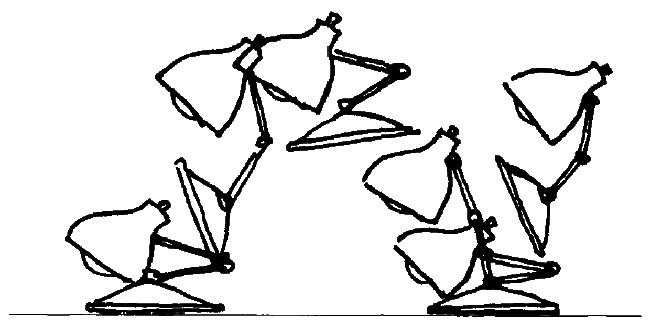
principles of animation
- squash-and-stretch
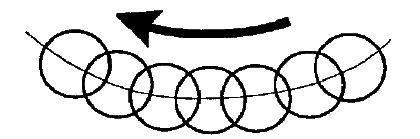 |
slow motion |
 |
fast motion |
 |
fast motion w/ s.s. |
principles of animation
- timing
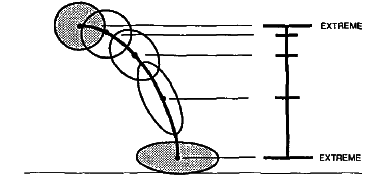
principles of animation
- anticipation
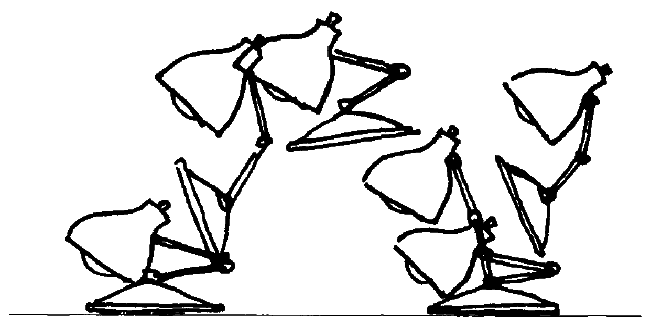
animation
movie time: luxo jr.
how animation works?
- flip very fast a set of fixed images
- perceived as motion by our visual system
- how many images per second?
- shoudl be above flicker fusion: > 60 Hz
- NTSC TV signal: 60 half-frames per second
- movies: 24fps repeated 3 times
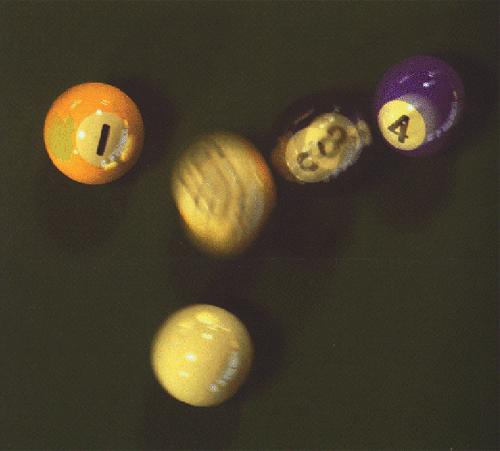
motion blur
- avoid aliasing over time
- equiv. to color "averages" to remove "jaggies"
representing changes
- one frame-at-a-time
- inefficient and cumbersome
- key-pose animation
- define key poses
- interpolate in the middle
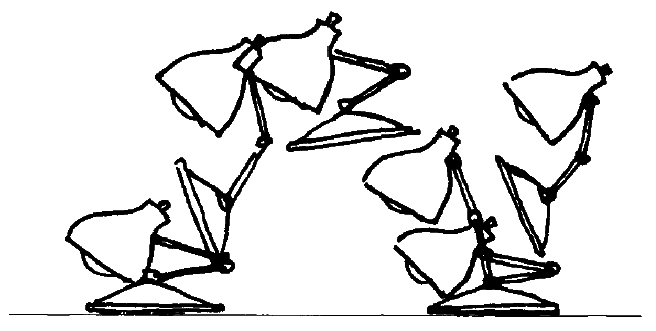
key-frame animation
- used in 2D hand-drawn animation
- head animators define key poses
- in-betweeners define intermediate poses
- same conceptual framework
- animator defines key poses
- computer interpolates intermediate poses
key-frame animation
key-frame animation
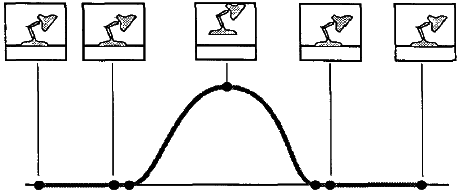
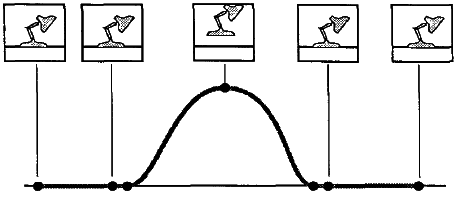
- how to define interpolating function
- choose smooth curve formulation: splines
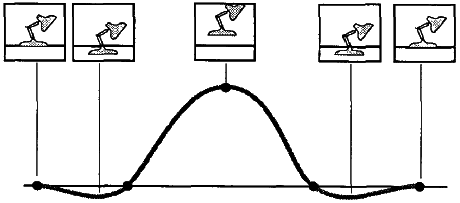
- interpolation is not rock-solid
key-frame animation
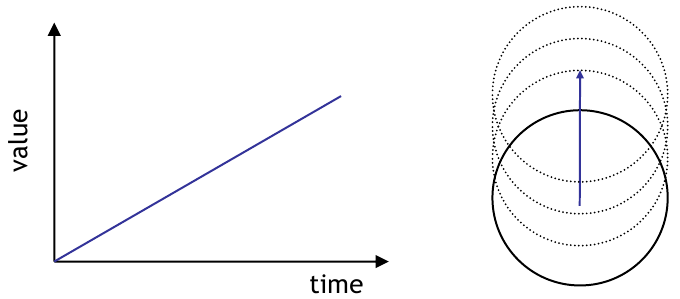
- feedback comes in various forms
- animation playback
- parameter curve
- ghosting
key-frame animation
- what to interpolate?
- shapes are defined by control points
- too many controls for animation purposes
- express deformation with meaningful parameters
- deformation: changes in shape
- shapes are defined by control points
- degrees of freedom
- modeling: number of control points
- animation: parameters of deformations
- ui: parameters of manipulators
- use smallest number of degrees of freedom
deformation examples
- rigid body transformation
- translation/rotation
- shape is unchanged
\[\point{p}' = M \point{p}\]
- modeling representation
- move all the control points: \(n \xx 3\) DOFs
- deformation/animation transformation
- translation + rotation vector: \(6\) DOFs
deformation examples
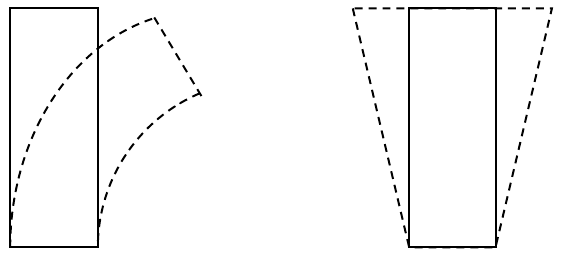
- deformations change shape
- introduce different functions
- limits on the type of deformation
\[\point{p}' = f(\point{p},\{\alpha_i\})\]
deformation examples
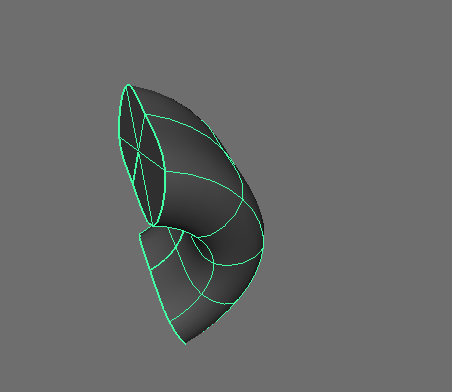
deformation examples
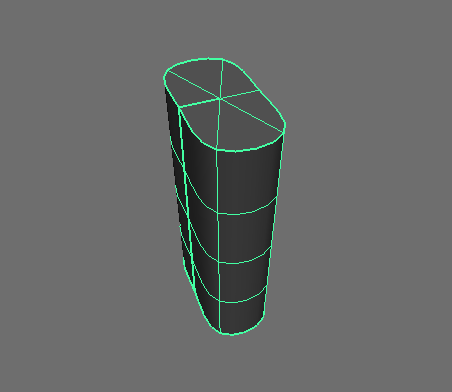
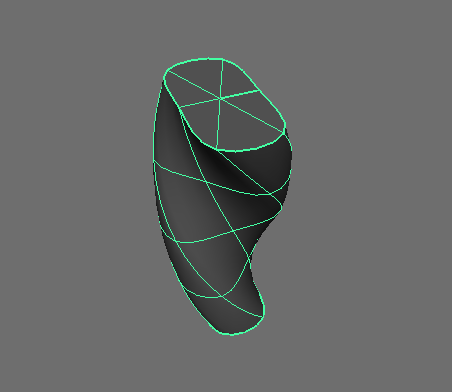
deformation examples
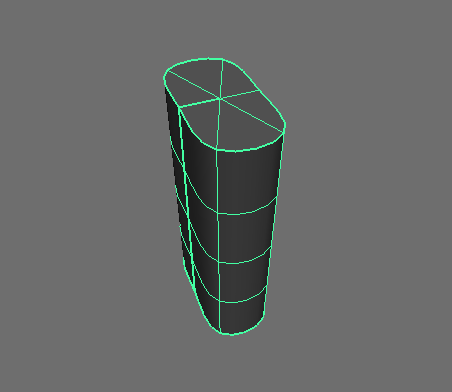
- using a lattice of control points
- key idea: size of lattice is smaller than model

complex deformations
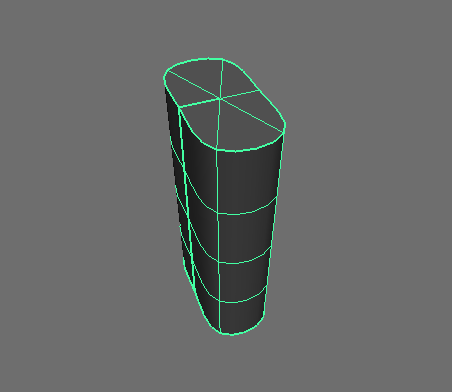
- complex deformation by function composition
- no unified description
- so apply one after the other
\[\point{p}' = f_1(f_2(\point{p}))\]
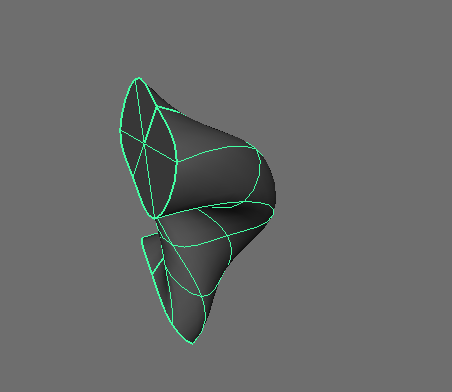
deformations and control points
- should we deform control points or the surface?
- in general, deforming control points is wrong
- cannot prove that the surface is equivalent
- in practice, deforming control points is ok
- control mesh is tessellated enough
- many useful transforms are well-behaved
deformations for characters
- often combination of lots of deformations
- specialized deformations
- mesh skinning: body deformation
- blend shapes: face deformation
mesh skinning
- deform surface around a skeleton
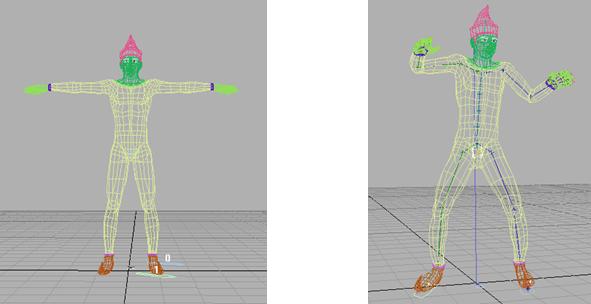
mesh skinning
- concepts based on skin/bone interactions
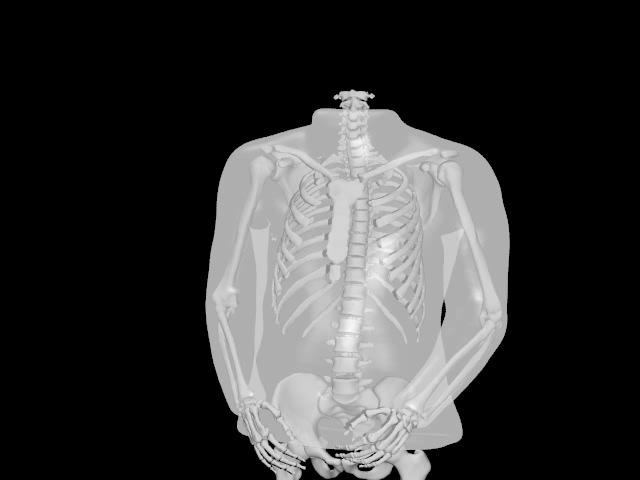
mesh skinning
- every bone has a transformation: \(M_j\)
- every bone-vertex has a weight: \(w_{ij}\)
- user provided, often zeros for most pairs
- typically not zero only for close enough "bones"
- deformation is weighted average of positions transformed by every bone
- weighted by the vertex weight
\[\point{p}_i' = \sum_j w_{ij} M_j \point{p}_i\]
mesh skinning
- deformation often defined for a rest pose
- positions are defined in model space
- reference matrices for model-to-bone transform
\[\point{p}_i' = \sum_j w_{ij} M_j {M_{ref}^{-1}}_j \point{p}_i\]
- normals use inverse-transpose formulation
mesh skinning
- solution for body deformation
- efficient to compute
- hardware acceleration available
- good control
- but hard to set up proper weights
- often used in games as-is
- used in movies as part of more complex set-ups
mesh skinning issues
- surface collapse
- around joints or for strong twists
- hard to fix
- cannot be fixed by tweaking weights
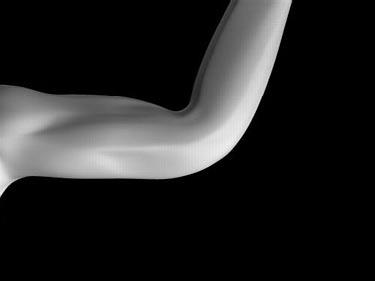
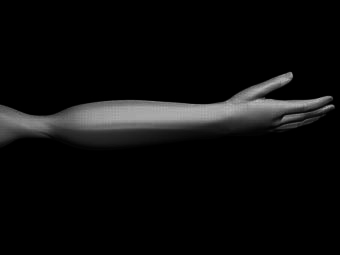
mesh skinning - defining weights
- often very time consuming: active research


mesh skinning - efficiency
- hard to use, but really fast implementations (Project Page)
blend shapes
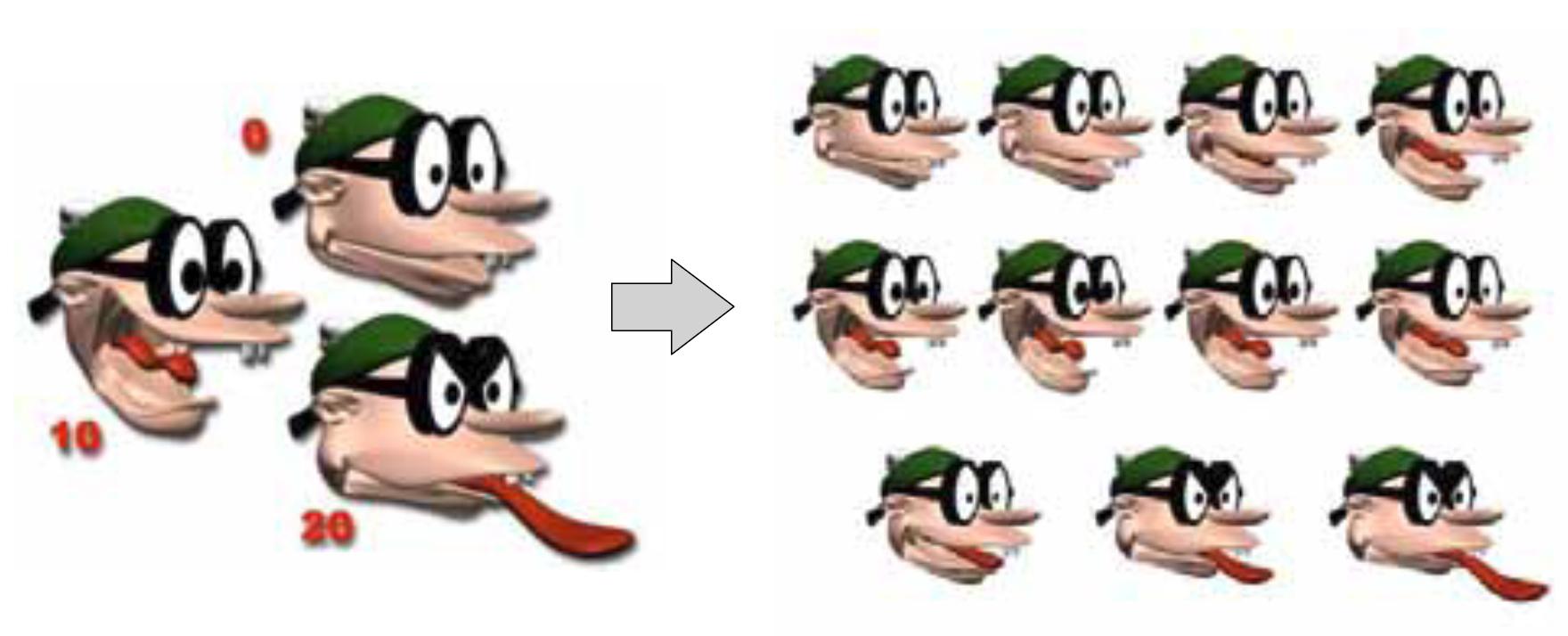
- interpolate set of meshes
blend shapes
- user provides a set of meshes with same topology
- final mesh is weighted sum of base meshes
- weights have to sum to \(1\)
\[\point{p}_i' = \sum_j w_j \point{p}_{ji} \qquad \sum_j w_j = 1\]
blend shapes
- solution for face deformation
- efficient to compute
- albeit increase memory usage
- great control
- but only works for small deformation
- cannot produce "novel" shapes
- often used in games
interpolating deformations
- just interpolate deformation parameters
- translation: position
- rotation: quaternions
- bending/twisting: angle
- skinning: skeleton translation/rotation
- blending: blend weights
interpolating translations
- linearly blend the translation keys
- for linear \(f\), \(\v(0.5)\) is the midpoint between the keys
\[\v(t) = (1-f(t))\v_0 + f(t)\v_1\]
- define a spline passing by the translation values
- additional controls define speed and acceleration
interpolating rotations
- how many degrees of freedom do rotations have
- 3, 1 for angle and 2 for direction
- what is a good representation for rotation?
- matrices
- Euler angles
- quaternions
interpolating rotations
- using matrices is problematic
\[M(t) = (1-f(t))M_0 + f(t)M_1\]
- for linear \(f\), \(M(0.5)\) may not be a rotation
- e.g., \(M_0\) is identity, \(M_1\) is \(90^{\circ}\) rotation about \(x\)
- \(M(t)\) is not a rotation, since \(MM^T\) is not \(I\)
\[M(0.5) = \mat{1 & 0 & 0 \\ 0 & 1 & 0 \\ 0 & 0 & 1}\mat{1 & 0 & 0 \\ 0 & 0 & 1 \\ 0 & -1 & 0} = \mat{1 & 0 & 0 \\ 0 & 0.5 & 0.5 \\ 0 & -0.5 & 0.5}\]
interpolating rotations
- Euler angles
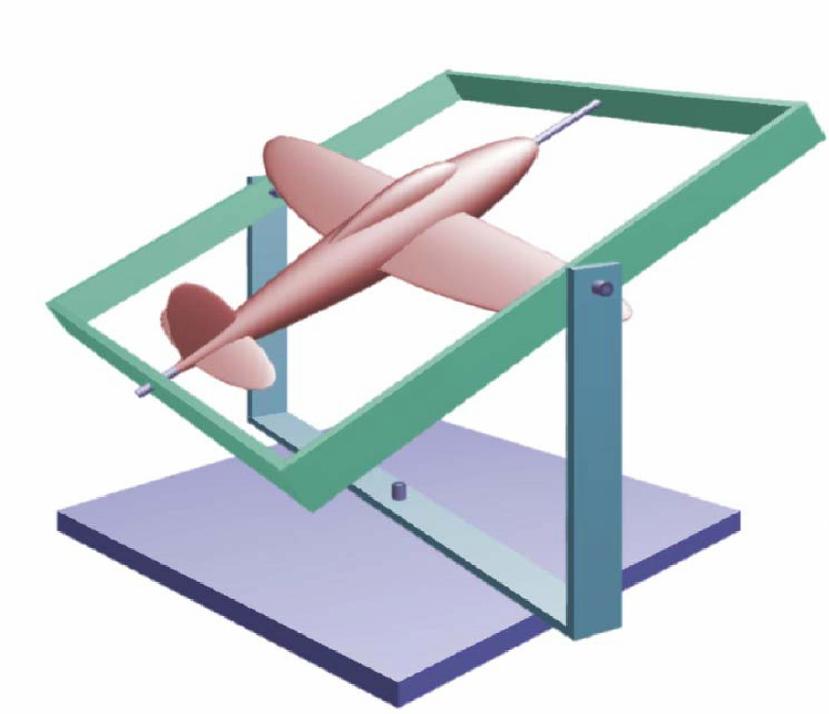
- rotation around 3 different axes
- can represent any rotation
- interpolation is unnatural
- \(90^{\circ}\) around \(Z\) then \(Y = 120^{\circ}\) around \((1,1,1)\)
- \(30^{\circ}\) around \(Z\) then \(Y \neq 40^{\circ}\) around \((1,1,1)\)
interpolating rotations
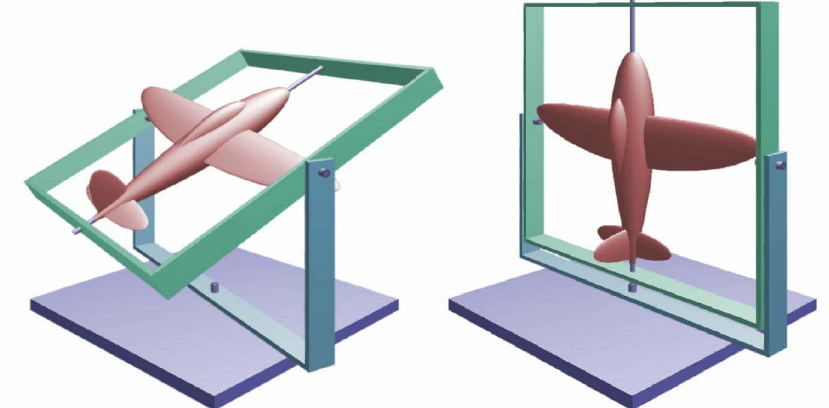
- gimbal lock
- may lock degrees of freedom when interpolating
interpolating rotations
- matrices: incorrect rotation
- Euler angles: unnatural and gimbal lock
- quaternions: nice mathematical framework
- won't cover in depth
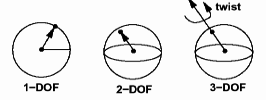
- intuition: interpolate rotation as point on sphere
providing deformation parameters
- kinematics
- provide transformation parameters directly
- hand-editing
- forward kinematics
- inverse kinematics
- motion capture
- dynamics
- solve physics equations of motion
forward kinematics
- artists define transformation parameters directly
- hierarchical transformations
- used for bone structures in character animation
- e.g. skeletons or robots
- hard to define what happens at end of chains
- e.g. which angles should the leg be to have the foot touch the floor?
- done by trial and error
- used for bone structures in character animation
forward kinematics
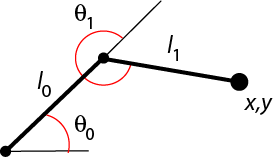
- position at end of the chain
\[p_x = l_0 \cos \theta_0 + l_1 \cos(\theta_0 + \theta_1)\]
\[p_y = l_0 \sin \theta_0 + l_1 \sin(\theta_0 + \theta_1)\]
inverse kinematics
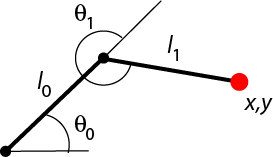
- specify directly the position at the end of chain
- easier to control motion, less trial and error
- joint angles solutions by inverting previous eqns.
inverse kinematics
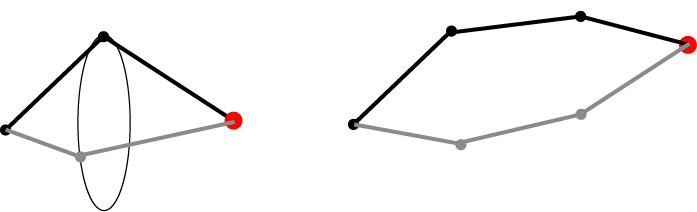
- more bones results in under-constrained system
- infinite number of solutions
- which solution to pick?
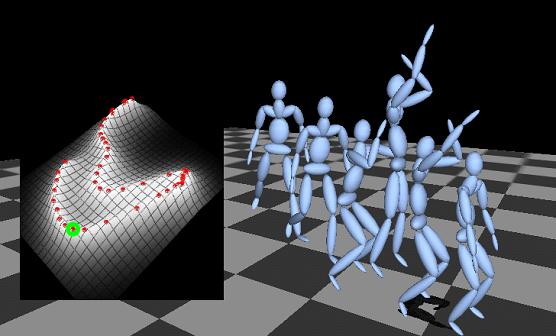
- impose constraints: minimize energy function based on plausible motion
inverse kinematics
- or try to capture "styles"
- by learning from data sets
motion capture
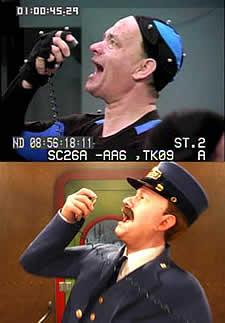
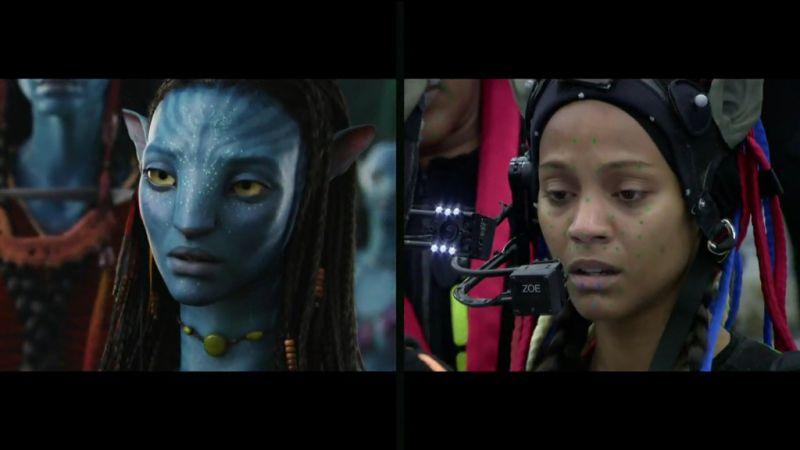
- record motion and play it back
- how to record: motion capture systems
- how to apply motion to digital characters
- motion editing
- motion retargeting
motion capture usage
- heavily in games, a bit in movies
- not very expressive, but higher expectation
motion capture systems
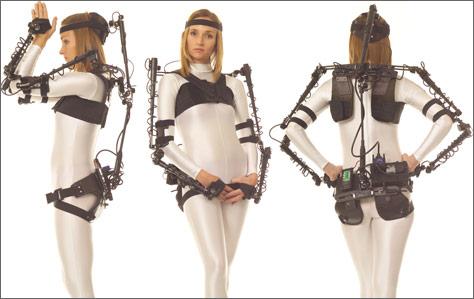
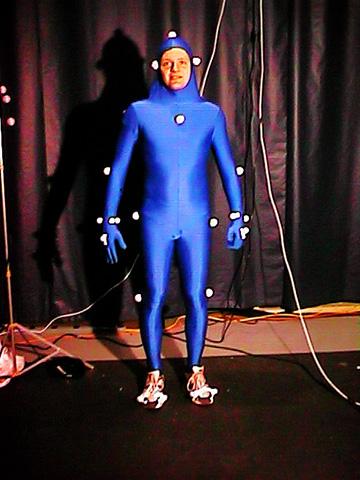
motion capture editing
- motion capture generates too much raw data
- how to edit it? try to fit with lower DOFs models
- motion retargeting
- capture from actor A, but apply to actor B
- how to do this in a believable manner?
- clean up motion
- noise present in data / too little DOFs
- how to clean it up?
- often just starting point for manual animation
kinematics vs. dynamics
- kinematics: specify parameters directly
- dynamics: solve the equations of motion
- physically based animation
- rigid body dynamics
- solve rigid body equations
- collision detection
- doable in many cases
- more complex cases almost impossible
- cannot model physics accurately enough
- simplify for good-enough solutions
dynamics
- animation from dynamics is accurate
- since we are simulating physics
- at the price of less artistic freedom
- cartoon physics
- control-vs-correctness triage often hard
- interests in mixing dynamics with kinematics
- open research issue
dynamics
- simulating simple objects
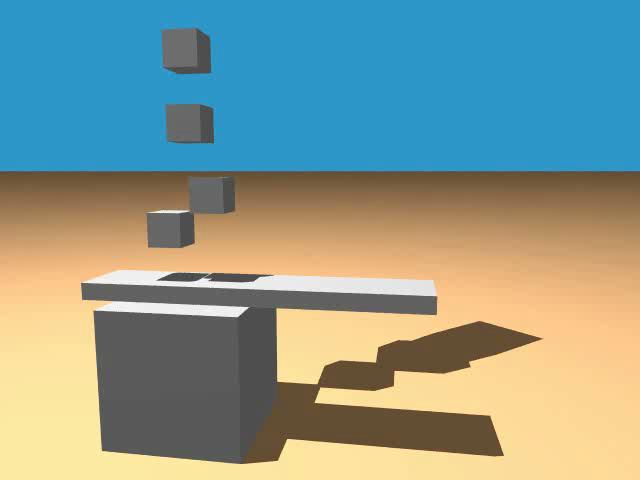
dynamics
- simulating complex situations
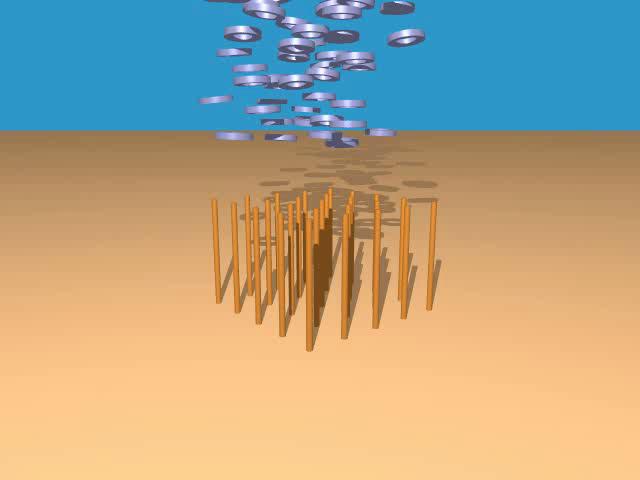
dynamics
- simulating complex objects
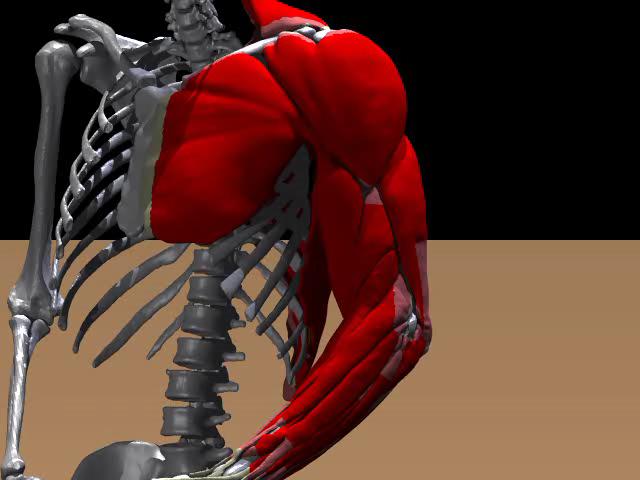
controlling dynamics
- basic principle: cheat where you can
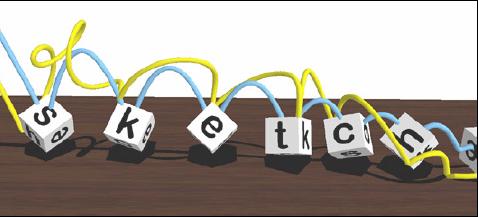
animation
movie time: for the birds
natural phenomena
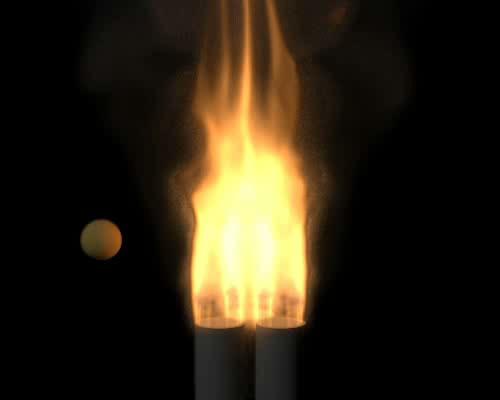
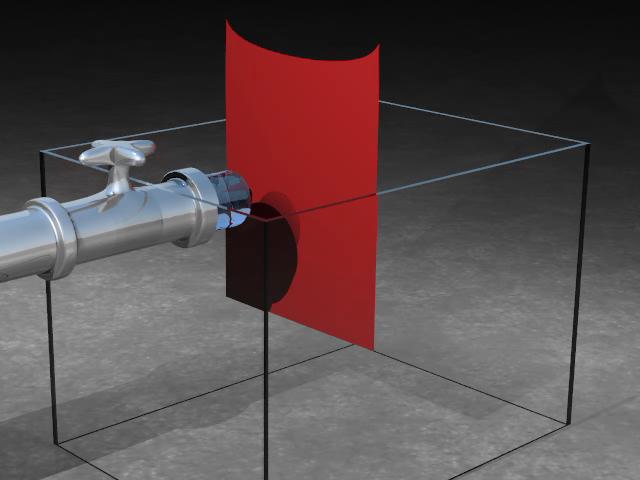
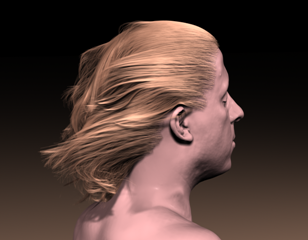
- often done by physical simulation
- looks like computational physics
- simulation domain
- choose based on phenomena to define
- e.g. smoke uses volumetric adaptive grids
- e.g. cloth uses points/springs system
- choose based on phenomena to define
- simulation algorithms
- very different ones depending on simulation domain
- lots of open research
- very different ones depending on simulation domain
- Fedkiw site
natural phenomena
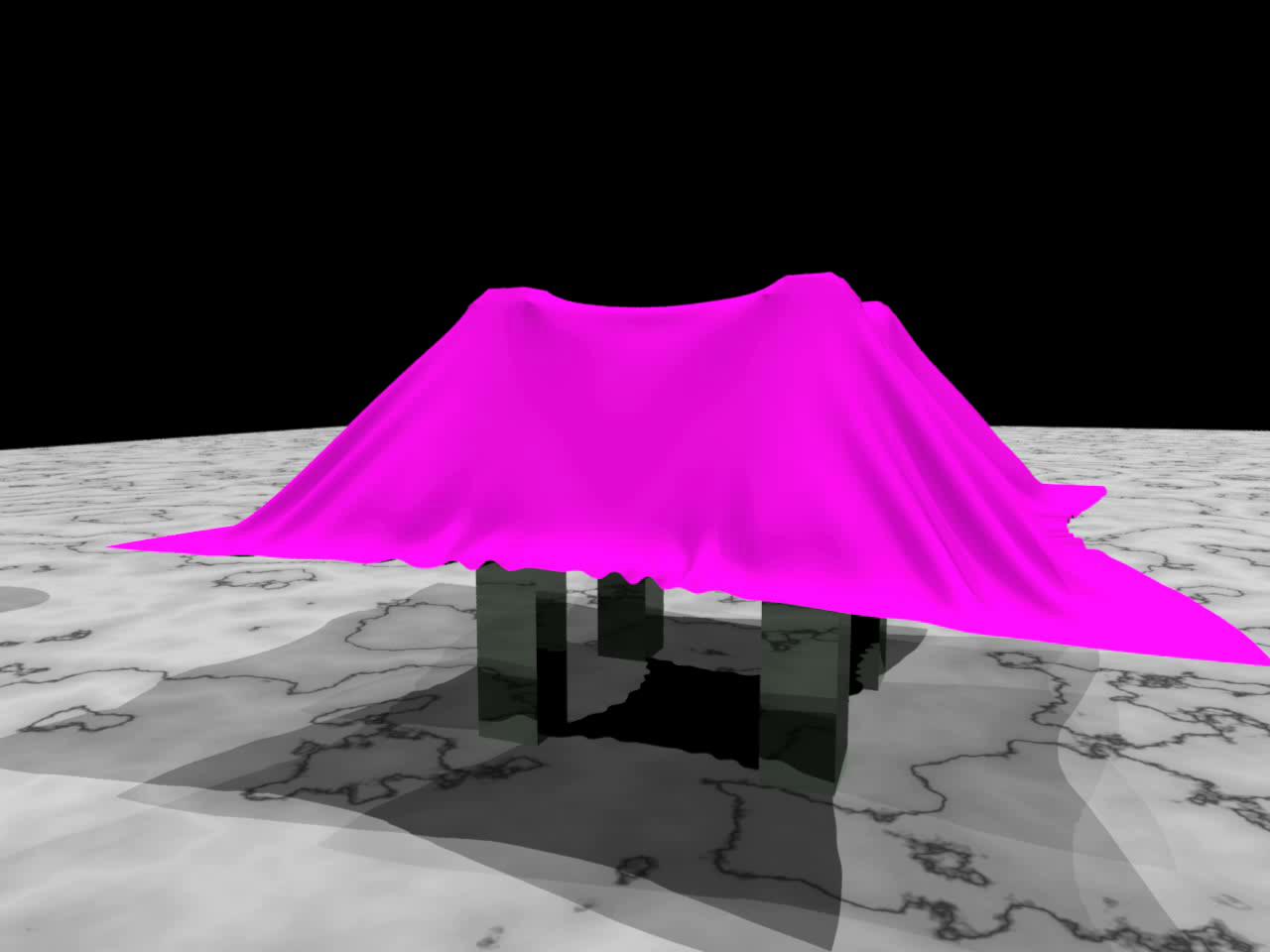
natural phenomena
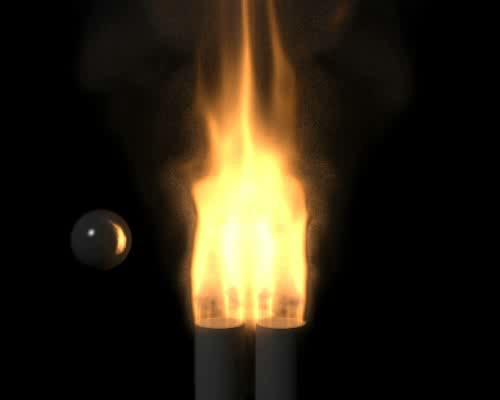
natural phenomena
natural phenomena
particle system
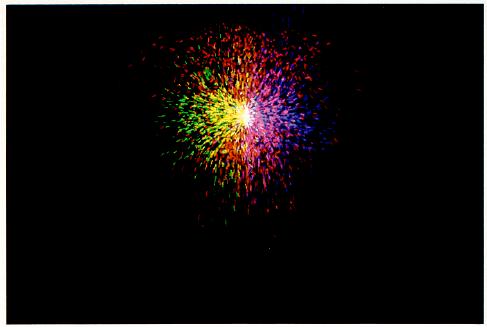
- collection of particles
- simple, since it is just simulating point dynamics
- used heavily in special effects
- complex phenomena represented as point/force collections
- simplest dynamics formulation
- point properties
- dynamics: position, velocity, acceleration
- varying properties: color, temperature, lifespan
- constant properties: mass. lifetime
particle system
- for each frame
- create new random particles
- where to create? along point/line/surface
- artistic control
- delete expired particles
- random/lifespan/collision
- update particles based on dynamics
- render particles
- create new random particles
particle dynamics
- Newton equation
\[\v = \frac{d\p}{dt} \qquad \a = \frac{d^2\p}{dt^2} \qquad \F(\p,\v,t) = m\a\]
- find position at time \(t\)
- given position, velocity, and acceleration at time \(0\)
- initial value problem: use Euler method
- more efficient methods exist
\[\array{c}{ \p(0) = \p_0 \\ \v(0) = \v_0 \\ \a(0) = \a_0 } \rightarrow \array{c}{ \v(t+\Delta t) = \v(t) + \a(t)\Delta t \\ \p(t+\Delta t) = \p(t) + \v(t)\Delta t + \frac{\a(t)\Delta t^2}{2} }\]
particle systems example
particle systems example
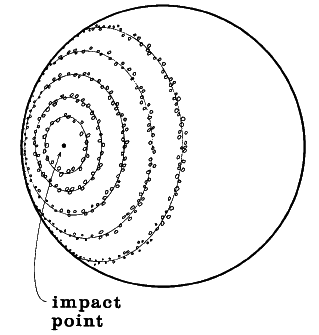
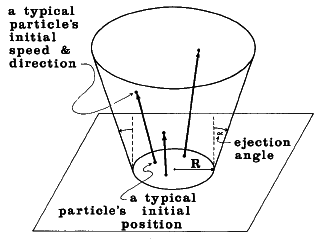
particle systems example
 |
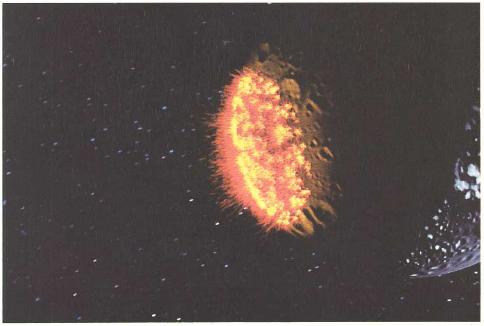 |
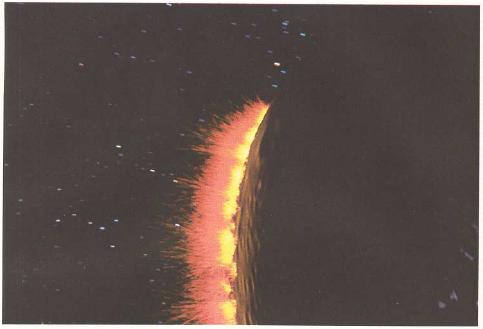 |
 |